
The Tumbleweed
On scale, symbols, and the people who stay.

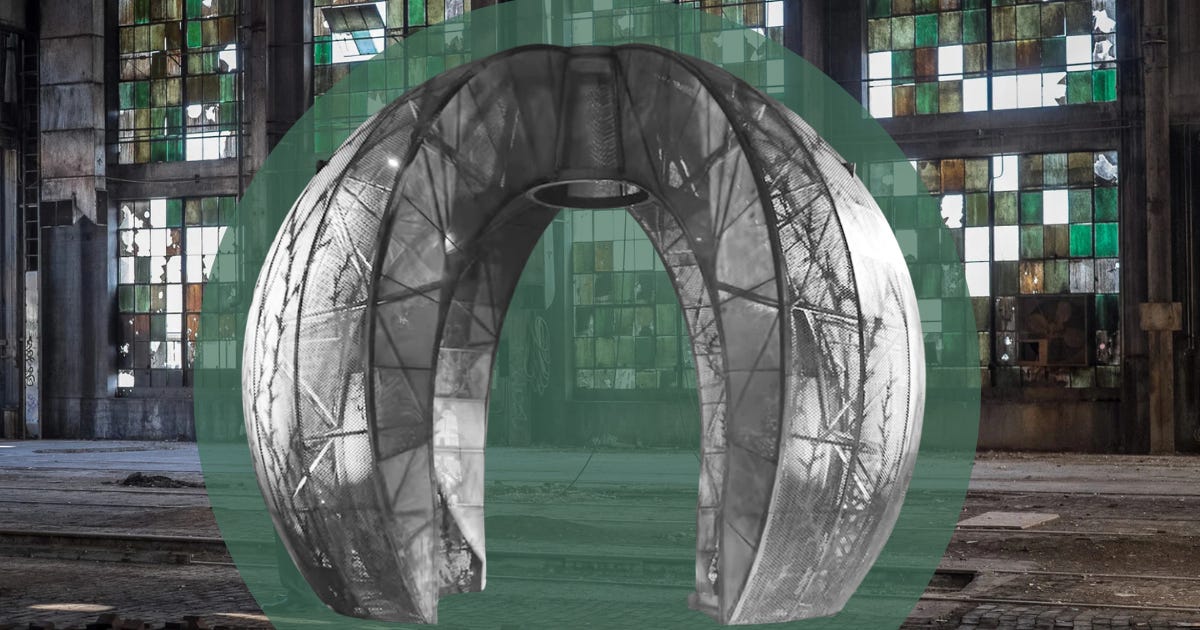
I went on a Saturday in March. Parked just outside the gate at the Rail Yards, walked the perimeter to get a few different angles. The sun was still up. The gate was closed.
You can see it clearly from outside the fence. And I stood there long enough to understand something the photographs had never told me.
Scale. Bigger than you expect, and I like that about it. We don’t have enough of that yet. It looks like we invested some money in it, and it’s important that we do. We are still a city learning to believe in itself.
This is one more notch on that “real city” belt. The bear in Denver. The Bean in Chicago. We have this now. It’s a postcard moment, and we need more of those.
I didn't know Antoine Predock designed it until I got home. I looked it up before I sent my public comment to the paper, so I knew whose work it was by the time I put my name on anything. But I'd made my judgments before I knew that. I went because of the thing itself, not the name attached to it. Predock died two years before, March 2, 2024, at home in Albuquerque at 87. When his public funeral happened, I knew several people who went. I didn't. It felt disrespectful to grieve publicly for someone whose work I admired but hadn't studied deeply enough to claim. But I drove to the Rail Yards and stood outside a fence around his last major public work until the light changed. My instincts got there before my knowledge did. That's something. I'm not sure what, but it's something.
The tumbleweed itself is mid, and I mean that with precision. Artistically, I wanted him to commit. It’s not entirely abstract, not entirely literal. It reads patinaed without looking rusted. Segmented like a citrus fruit, with fronds that are softer than a true gangly, sharp tumbleweed. It’s a kinder version. And I’m okay with that. But it lives in the middle, and the middle is the hardest place to defend.
But the tumbleweed as symbol I’ll defend. Yes, it’s an invasive species from Russia. It’s also been woven into the visual lexicon of the American Southwest for generations. We didn’t choose it. It arrived, spread everywhere, and became part of the iconography anyway.
What the bear and the bean don’t have: you can stand inside this one. You can look at it and look through it at the same time. The entire courtyard orients around it. A shady refuge in an otherwise blazing concrete zone. It’s not just a thing. It’s an experience. It makes the space feel intentional in a way that most of downtown Albuquerque still doesn’t.
He was an architect of international stature who could have practiced anywhere. He stayed in New Mexico. That sentence from his UNM obituary keeps sitting with me. Because it’s surprising. Because of what it costs. To be that good and that rooted simultaneously. To resist the pull toward the places that would have celebrated you louder. To build your spiritual home in the same place you actually live.
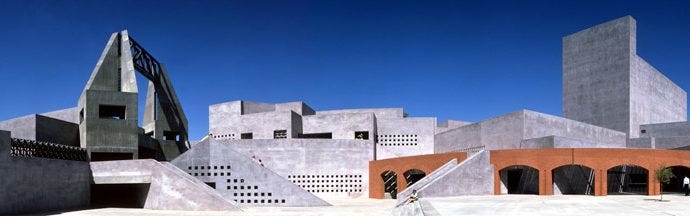
The tumbleweed will outlast any argument about what it symbolizes. So will he. You can look at it and also look out of it. That’s a smart move. It’s an experience as much as a thing. It’s a memory. It’s a grand entrance. This installation is a marker of where this city is right now, however complicated that is.
Regardless of whether you love it or hate it, the size deserves commendation. It's good and it's big.
One note for anyone ready to argue it’s not authentically New Mexican: Albuquerque has had a 14-foot tumbleweed snowman along I-40 as an annual Christmas tradition for years. Maybe it's not New Mexican. But it is Burque.